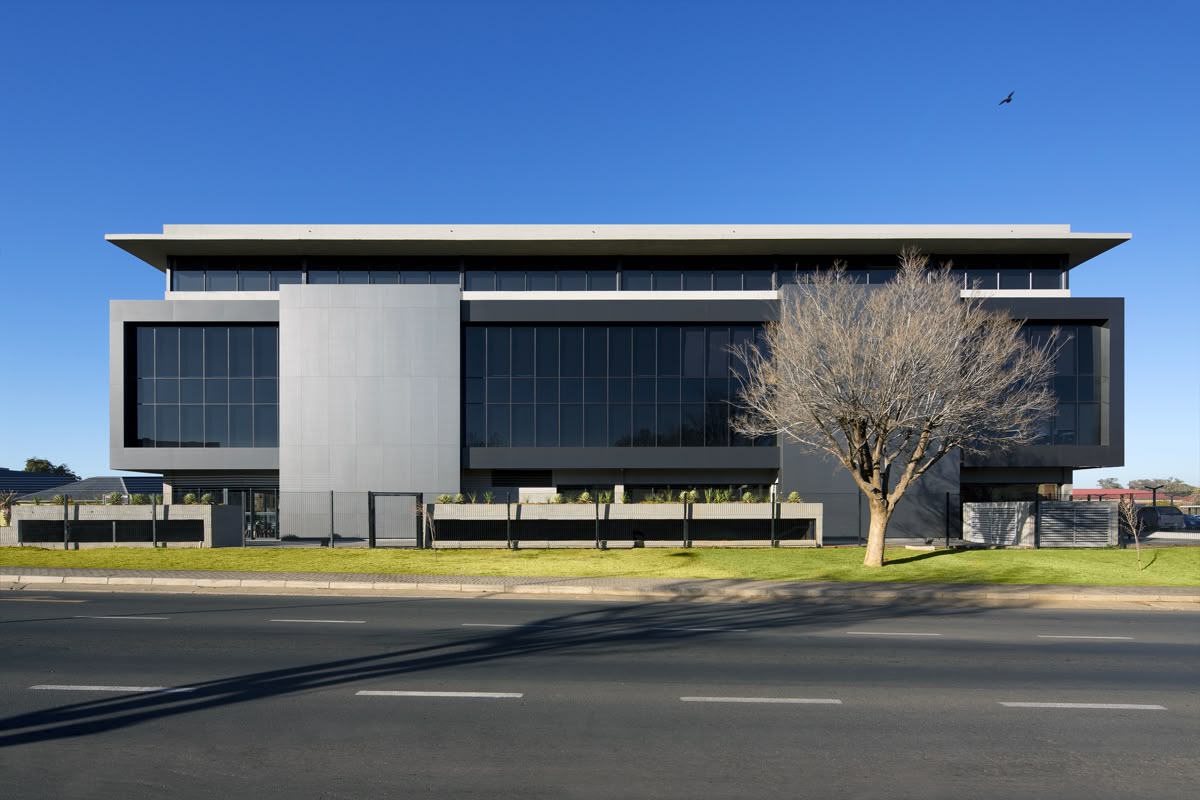

Real-time virtual replicas are changing how we commission complex MEP systems — reducing time, cost and post-occupancy surprises.
Building commissioning has long been one of the most labour-intensive and risk-prone phases of any construction project. Systems are installed, tested individually, then integrated — a process that reveals problems late, when they are expensive to fix. Digital twins are beginning to change that fundamentally.
A digital twin is a real-time virtual replica of a physical building system. Unlike a static BIM model — which captures geometry and specification — a digital twin is live. It ingests sensor data from the actual building and reflects current operating conditions, allowing engineers to observe, simulate and intervene before problems become crises.
What changes at commissioning
On a recent mixed-use development in Johannesburg, we deployed a digital twin of the HVAC system six weeks before practical completion. Rather than waiting for the building to be occupied to discover balancing issues, we ran occupancy simulations against the live model — identifying three airflow asymmetries in the atrium zones that would have led to comfort complaints within the first month.
"We found three critical airflow issues six weeks before handover. Without the twin, we would have found them six weeks after."
The fix cost less than two days of site time. Had we discovered the same issue post-occupancy, the remediation would have required partial ceiling removal and re-balancing under occupied conditions — a project in itself.
The data integration challenge
The biggest barrier to digital twin adoption is not the technology — it is data integration. A meaningful twin requires clean, consistent sensor data from BMS points, metering infrastructure and IoT devices, all mapped accurately to the model. On projects where BMS specifications are not tightly coordinated from the design stage, this mapping exercise can be significant.
- —Define sensor strategy at RIBA Stage 2 — not Stage 5
- —Specify open-protocol BMS (BACnet, Modbus) to avoid vendor lock-in
- —Build the digital twin geometry from the IFC export, not from scratch
- —Allocate commissioning time for data validation — typically 10–15% of total commissioning programme
When these steps are taken in order, digital twin commissioning becomes genuinely transformative. Our data shows an average 30% reduction in commissioning time on projects where twins are deployed from design stage, and a consistent improvement in first-year energy performance against design targets.
What comes next
The real value of a digital twin extends well beyond commissioning. The same model that helped us balance airflows before handover is now in the hands of the facilities management team, giving them a live view of equipment performance, predictive maintenance alerts and energy consumption analytics. The building does not just perform — it explains itself.